17-11-2026
Category : Article
Keeping your car’s air conditioning in good condition doesn’t require much work at home. Using the system regularly, keeping the cabin filter in good condition and paying attention to changes in cooling can all help you stay on top of basic maintenance.
There are limits to what you should do yourself, though. Refrigerant, compressor components and electrical faults need proper testing and equipment. Routine care is mainly about keeping the ventilation system clear and recognising when something isn’t working as it should.
Here are a few practical car air conditioning maintenance tips you can follow between workshop visits.
Should You Run Your Car’s Air Conditioning During Winter?
It’s worth using your car’s air conditioning year-round, even when you don’t need cold air.
Running the system periodically allows refrigerant and lubricant to circulate through the components. On systems that rely on refrigerant circulation to distribute compressor oil, regular operation may also help keep certain seals lubricated.
You don’t need to set the temperature to its lowest setting. Most vehicles allow the air conditioning compressor to operate while the climate controls are set to a comfortable temperature.
Air conditioning can also help remove moisture from the cabin air, making it useful when demisting windows during cooler weather.
Some vehicles automatically activate the compressor when the windscreen demister is selected, although operation varies by model and outside temperature.
Regular use is helpful, but it doesn’t replace routine inspections. Knowing how often car air conditioning should be serviced also matters, as maintenance requirements depend on the vehicle’s age, condition and manufacturer recommendations.
Keep an Eye on the Cabin Air Filter
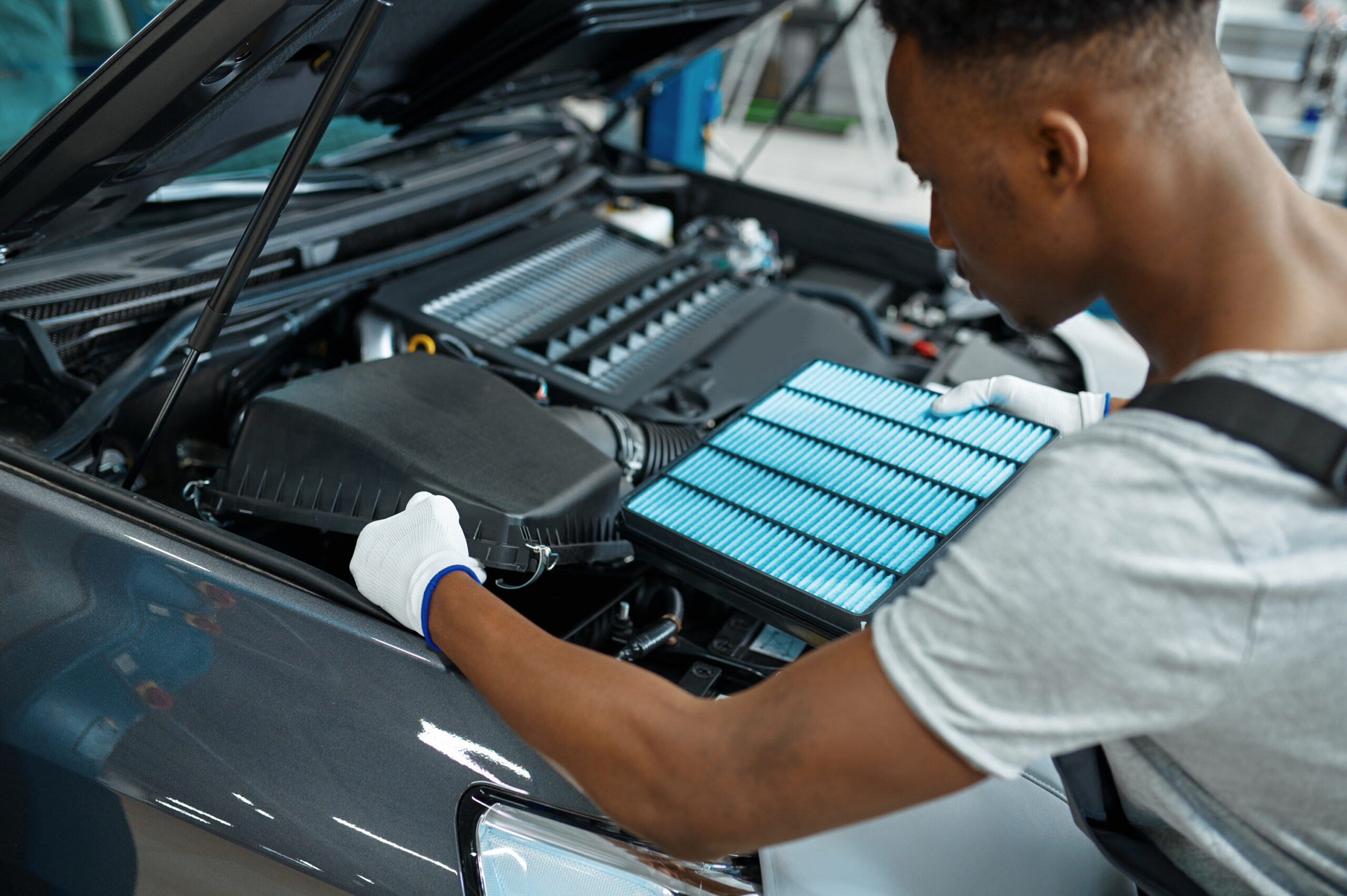
A blocked cabin filter can make the ventilation system feel less effective, even when the air conditioning itself is cooling normally.
The filter captures dust, pollen and other particles before they enter the cabin. As dirt builds up, less air can pass through the dashboard vents, reducing airflow.
If the fan is running at a high setting but the airflow feels weaker than usual, the filter is worth checking.
Replacement intervals vary between manufacturers, and vehicles regularly driven on dusty roads may need attention sooner.
Some cabin filters are relatively easy to access; others are tucked away behind trim panels or various bits and pieces that you’ll need to prise away to get at them. If you’re checking or replacing the filter yourself, it’s worth following the owner’s manual.
A clean filter helps maintain airflow, but it won’t fix problems involving the blower motor, compressor or refrigerant system.
Check That the Outside Air Intake Is Clear
Leaves and all sorts of other debris can accumulate around the ventilation intake just below the windscreen.
Depending on the vehicle, this area will provide outside air to the cabin ventilation system. If the intake becomes blocked, it could restrict airflow and/or allow debris to accumulate around adjacent components.
When you’re washing your car, take a moment to check the visible intake openings and remove any loose leaves and dirt you can reach safely.
Don’t push any debris through the openings, and don’t blast high-pressure water into the intake. You could actually push the dirt further in and introduce moisture into areas that aren’t intended to have it.
If there’s a persistent musty smell or water getting in the cabin, then further inspection may be required. A blocked drain passage or moisture in the ventilation housing won’t necessarily be sorted out simply by clearing the outside grille.
Pay Attention to Changes in Cooling
You probably know how quickly your car usually cools down after sitting in the sun. If that changes noticeably, it’s worth paying attention.
For example, the air may take longer to become cold, or the temperature from the vents may fluctuate while you’re driving.
Hot weather, direct sunlight and the cabin’s starting temperature can influence how quickly the interior cools. A slower cooldown on an extremely hot day doesn’t automatically indicate a fault.
However, if cooling has gradually deteriorated over several weeks or the system no longer performs as it previously did under similar conditions, an inspection may be worthwhile.
Low refrigerant, restricted condenser airflow, and compressor problems can all affect performance, but the symptoms alone won’t identify the cause.
Avoid assuming that weak cooling means the system needs a regas. Refrigerant loss should be investigated, particularly if the problem keeps returning.
Make Sure the Fan and Vent Controls Respond Normally
The blower motor and ventilation controls determine how much air enters the cabin and where it goes.
You can check their basic operation without touching any mechanical or electrical parts.
With the vehicle safely parked, change the fan between its available speed settings. Airflow should generally respond to the adjustments, although the exact behaviour depends on the climate control system.
Next, switch between the dashboard, footwell and windscreen vents. You should notice air moving towards the selected outlets.
If the fan only works on certain speeds, stops unexpectedly or fails to respond to the controls, there may be an electrical problem.
Likewise, if air continues coming through the wrong vents, an internal air distribution door or actuator may need attention.
These checks won’t diagnose the fault, but they can help you describe the problem more accurately when booking an inspection.
Don’t Ignore Unusual Smells or Noises
Changes in how the air conditioning sounds or smells can be worth investigating, particularly when they occur repeatedly.
A damp or musty smell may come from moisture and contamination around the evaporator, a dirty cabin filter or another part of the ventilation system.
A brief change in smell when switching between fresh air and recirculation isn’t necessarily unusual. Persistent unpleasant odours, however, should not simply be covered with air fresheners.
Noises deserve similar attention.
A squeal that varies with fan speed could be the blower motor. At times, rattling can be due to debris in the fan housing. Noise from the engine bay when the A/C is on may be a different issue altogether.
If you do notice a new or ongoing noise, please let us know when it occurs and whether it varies with the fan setting or engine speed.
Avoid spraying cleaning products into the ventilation system or dismantling components without checking the manufacturer’s instructions. Some cleaning methods and chemicals can damage internal materials.
Can You Help the Air Conditioning Cool the Cabin More Efficiently?
A few everyday habits can reduce the amount of heat the system needs to remove, especially after your car has been parked outside.
Using a windscreen sunshade or parking under cover can help limit heat build-up inside the cabin.
When you first enter a very hot vehicle, briefly opening the windows can release some of the trapped hot air before relying entirely on the air conditioning.
Once the cabin begins to cool, recirculation mode can be useful because the system uses air that has already been cooled rather than continually drawing in hot outside air.
However, recirculation isn’t appropriate in every situation. Fresh air or demisting settings may be needed when condensation develops on the windows.
These habits won’t repair a faulty system, but they can make cooling more comfortable during Melbourne’s warmer months.
Which Air Conditioning Tasks Should Be Left to a Mechanic?
Basic owner maintenance has its limits. Refrigerant handling, leak repairs, compressor work and electrical testing should not be attempted without the appropriate qualifications and equipment.
Car air conditioning systems operate under pressure and may contain refrigerants that require specific handling procedures.
For regulated refrigerants in Australia, relevant refrigerant handling work must be performed by appropriately licensed personnel.
An inspection may involve checking refrigerant pressure, examining hoses and seals for leaks, testing compressor operation or assessing the condition of the condenser and associated components.
The right checks depend on the fault. For example, weak airflow from a blocked filter requires a different approach from an air conditioning system that blows normally but produces little cooling.
If the problem involves refrigerant loss, a damaged component or an electrical fault, the underlying issue should be identified before repairs are recommended.
Need Help With Car Air Conditioning Maintenance in Mordialloc?
Simple habits such as keeping the cabin filter clean, clearing visible debris from the outside air intake and using the system regularly can help you monitor its condition between services.
If cooling has become weaker, the fan isn’t responding properly, or you’ve noticed unusual noises, Mordialloc Service Centre can inspect the system and advise on the work required.
Our AC mechanics in Mordialloc provide air conditioning servicing, regassing, fault diagnosis and repairs for vehicles in Mordialloc and surrounding suburbs, including Mentone, Parkdale, Aspendale and Cheltenham.
Contact the Mordialloc Service Centre to discuss any changes to your vehicle’s air conditioning or to arrange an inspection.


 03 9587 7771